Reference guide
The Essential Guide to IRS 501(c)(3) Documents for Nonprofit Grants
Reference article
Why grantmakers verify tax-exempt status
Before disbursing funds, grantmakers, private foundations, and corporate sponsors are expected to confirm that a recipient organization is a legitimately recognized tax-exempt entity. This verification step protects the grantmaker against fraud and misdirected funds, and it helps ensure compliance with federal tax laws that govern charitable giving.
For private foundations in particular, federal rules impose excise taxes on grants made to organizations that do not qualify under the Internal Revenue Code, unless additional oversight procedures are followed. Verifying a recipient's status through official IRS documentation is therefore a standard part of responsible grantmaking, not a discretionary formality.
For applicants, the practical consequence is straightforward: the organizations that prepare clear, official documentation in advance move through review faster and with fewer follow-up requests.
The IRS determination letter
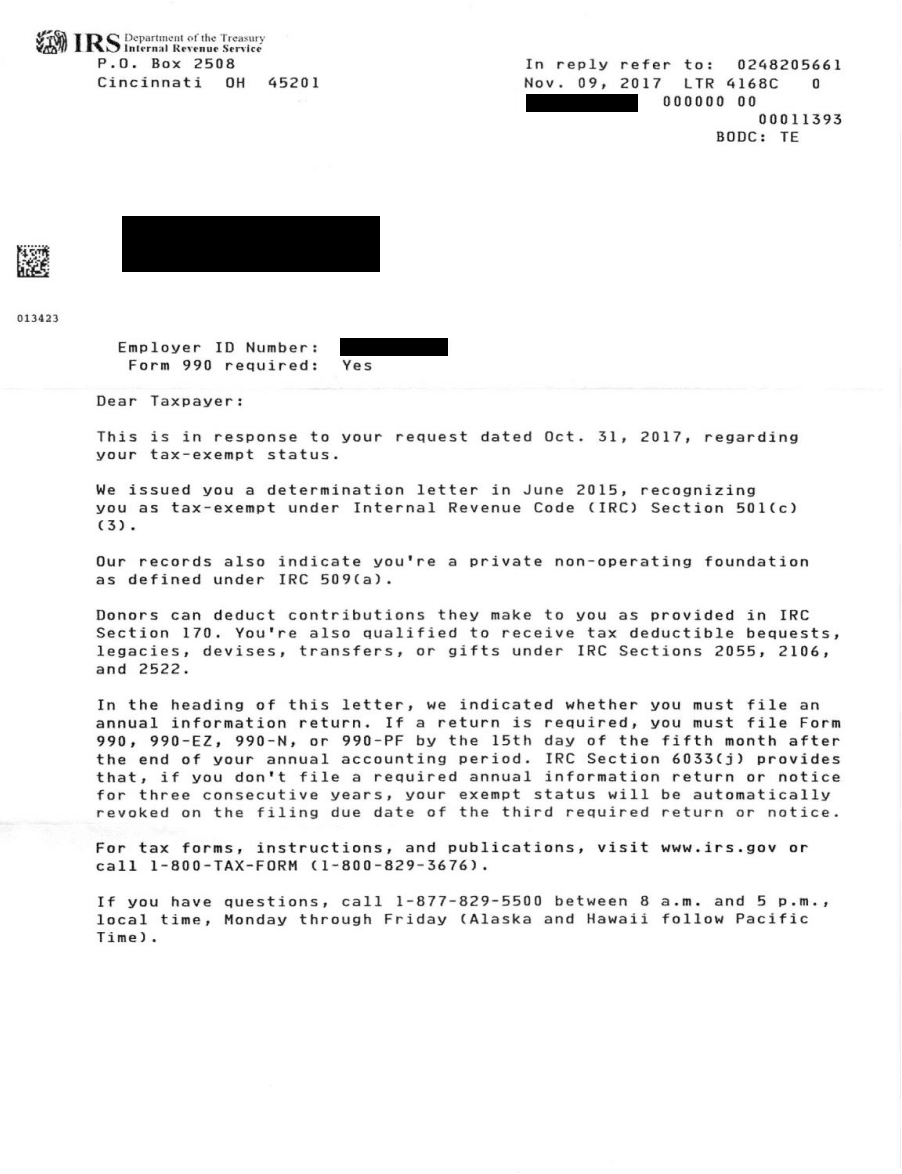
The IRS determination letter — commonly issued as Letter 947 — is the document the IRS sends when it recognizes an organization as exempt from federal income tax under Section 501(c)(3) of the Internal Revenue Code. It states the organization's legal name, its Employer Identification Number, the subsection under which exemption was granted, and the effective date of that exemption.
This letter is the only official proof of an organization's tax-exempt status. Entries in online directories, state registrations, or an organization's own statements are not substitutes, because only the IRS can confirm that recognition was granted and remains in effect.
Organizations that have lost their original determination letter can request an affirmation letter from the IRS by calling 877-829-5500. The affirmation letter serves the same evidentiary purpose and is widely accepted by grantmakers in place of the original.
The EIN confirmation notice
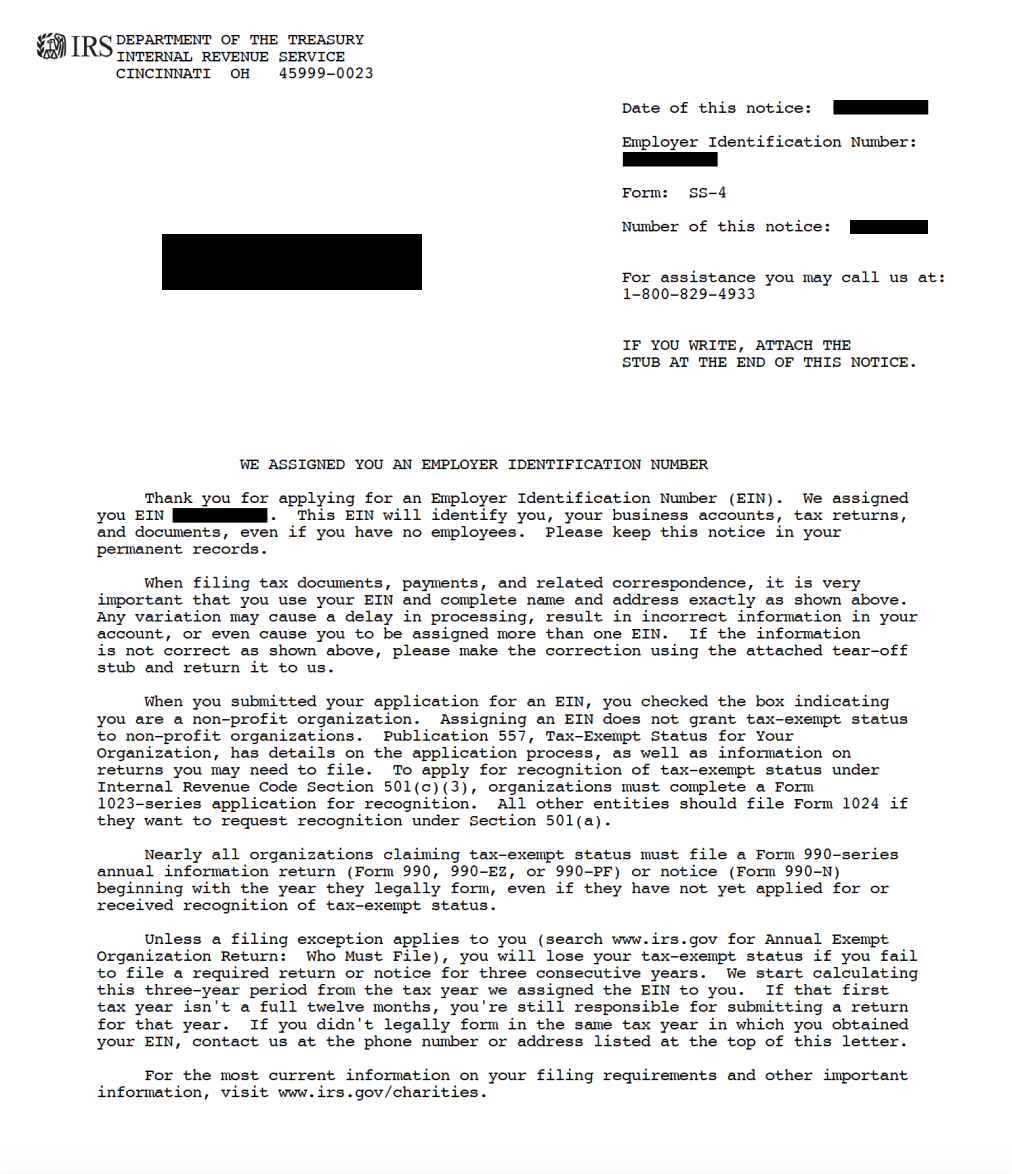
Every organization that applies for an Employer Identification Number using Form SS-4 receives an EIN confirmation notice, known as the CP 575 E notice. This notice records the nine-digit number the IRS assigned to the organization and the legal name under which it was registered.
An important distinction is frequently misunderstood: having an EIN does not, by itself, mean an organization holds recognized 501(c)(3) status. The EIN is simply a tax identification number, issued to businesses, trusts, and nonprofits alike. Recognition of tax-exempt status is a separate determination, evidenced only by the determination letter described above.
This is why grant applications commonly request both documents. The CP 575 E notice establishes the organization's identity in IRS records; the determination letter establishes its exempt status. Together they allow a grantmaker to confirm that the applicant named in the application is the same entity the IRS recognizes.
Financial verification
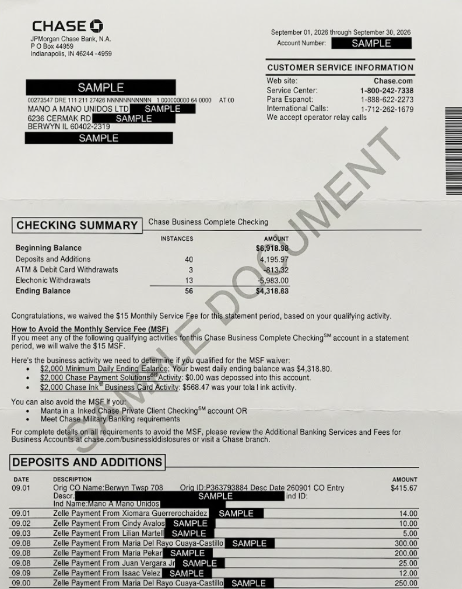
Some grantors additionally request a recent bank statement or a voided check. The purpose of this request is practical rather than investigative: it allows the grantor to confirm that the organization's legal name, as recognized by the IRS, matches the name on the bank account to which funds would be transferred.
This step protects both parties. It ensures that awarded funds reach the intended organization safely, and it reduces the risk of payment errors or diversion. Applicants providing a bank statement should redact account balances and transaction details that are not relevant; the grantor typically needs only the account holder's name, the financial institution, and the date of the statement.
Best practices for document submission
However a document is captured — by scanner, phone, or camera — a few consistent practices prevent the most common reasons applications are delayed or returned for correction:
- Capture all four corners of the page so nothing appears cropped or incomplete.
- Ensure even lighting without glare, shadows, or reflections across the text.
- Ensure the legal name on every document exactly matches the name in the IRS database.
- Never substitute official IRS letters with screenshots from public directories.
- Check that all text remains legible at full size before submitting the file.
This guide is general educational information for nonprofit organizations. It is not legal, tax, or financial advice. For guidance on a specific situation, consult a qualified professional or contact the IRS directly.